📖 The Ten Commandments — Catholic Biblical Exegesis Verse by Verse | Exodus 20 & Deuteronomy 5
📖 The Ten Commandments — Catholic Biblical Exegesis Verse by Verse | Exegesis Biblica
Exegesis Biblica — The Online Encyclopedia of Sacred Scripture exists to make careful, Catholic, text-first reading clear and useful. Scripture is read with Scripture, within the living tradition of the Church.
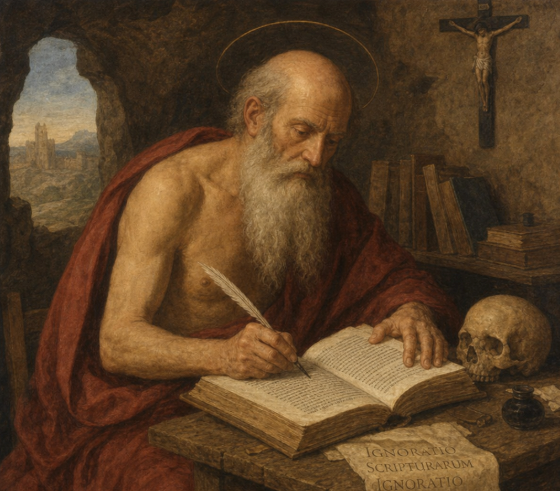
St. Jerome reminds every serious reader why this work matters: Ignorance of Scripture is ignorance of Christ.

How to Read the Decalogue (A Catholic Interpretive Map)
If you want ten commandments explained in a Catholic way, start with three anchor points:
- Literary form: Exodus 20 and Deut. 5 present covenant words spoken by God and given to Israel.
- Canonical context: The Decalogue is not floating morality. It stands in salvation history: rescue, covenant, worship, life.
- Catholic synthesis: The Church reads the Decalogue through Christ and apostolic teaching, as seen in the Catechism on the Ten Commandments (CCC 2052–2557).
Practical method in this article:
- We quote the Douay-Rheims Bible when we cite the commandments directly.
- We set Exodus 20 alongside Deut. 5 to note the stress and usage.
- We include Latin Vulgate notes when they help the sense.
📖 Read the Ten Commandments Verse by Verse →
🆓 Start Your FREE 15-Day Trial — Access All 73 Bible Books →
Exodus 20 & Deut. 5: Why Two Versions?
The two Decalogue texts are not contradictions. They are covenant restatements.
- Exodus 20 at Sinai comes in awe and is tied to rescue from Egypt and the shaping of Israel as a worshiping people.
- Deut. 5 on the plains of Moab is Moses’ pastoral recall to a new generation. It stresses memory, fidelity, and the passing on of covenant life.

Numbering and the Difference Question (Catholic vs Protestant)
Many readers ask why Catholic commandments differ. The biblical text is the same; traditions differ in how they number and group the commandments.
- Catholic and Lutheran traditions often treat ‘no other gods’ and ‘no graven images’ as one commandment focused on exclusive worship. They also split coveting into two parts: spouse and goods.
- Many Reformed and Protestant lists separate the image ban from coveting and combine them into one.
The First Word: Exclusive Worship (Exodus 20:2–6; Deut. 5:6–10)
Exodus 20:2 / Deut. 5:6 — The Prologue of Grace
Douay-Rheims (Exodus 20:2): I am the Lord thy God, who brought thee out of Egypt, out of the house of bondage.
Catholic exegesis starts here: the Decalogue begins with gift before demand. God’s law is covenant law, given to a freed people.
Latin Vulgate: Ego sum Dominus Deus tuus, qui eduxi te de terra Aegypti, de domo servitutis.
Exodus 20:3 / Deut. 5:7 — No Other Gods
Douay-Rheims: Thou shalt not have strange gods before me.
‘Before me’ is about covenant loyalty. No rival claim may replace God in worship, trust, or final obedience.
Exodus 20:4–6 / Deut. 5:8–10 — Images, Worship, and the Catholic Reading
Douay-Rheims: Thou shalt not make to thyself a graven thing... Thou shalt not adore them, nor serve them...
The ban is not on every religious image. It is about making images to adore and serve them as gods. Catholic theology distinguishes Latria (worship due to God alone), Dulia (honor given to saints), and Hyperdulia (special honor of Mary).

The Second Word: Reverence for the Divine Name (Exodus 20:7; Deut. 5:11)
Douay-Rheims: Thou shalt not take the name of the Lord thy God in vain...
Catholic reading sees more here than speech rules. Violations include perjury, blasphemy, profane religious language, and using God’s name to excuse injustice.
The Third Word: Sabbath, Rest, and Sunday Worship (Exodus 20:8–11; Deut. 5:12–15)
Douay-Rheims: Remember that thou keep holy the sabbath day...
Catholic doctrine sees the Sabbath’s fulfillment in Christ and in the apostolic practice of gathering on Sunday, the day of the Resurrection.

📖 Read the Ten Commandments Verse by Verse →
🆓 Start Your FREE 15-Day Trial — Access All 73 Bible Books →
The Fourth Word: Honoring Father and Mother (Exodus 20:12; Deut. 5:16)
Douay-Rheims: Honor thy father and thy mother, that thou mayst be longlived upon the land which the Lord thy God will give thee.
This is the bridge command — looking upward to God and toward neighbor, since family is the first school of charity.
The Fifth Word: The Sanctity of Life (Exodus 20:13; Deut. 5:17)
Douay-Rheims: Thou shalt not kill. Latin Vulgate: Non occides.
Catholic exegesis reads this as a ban on unjust taking of human life and on the wider field of violence and hate.
The Sixth Word: Fidelity and the Covenant of the Body (Exodus 20:14; Deut. 5:18)
Douay-Rheims: Thou shalt not commit adultery. Latin Vulgate: Non moechaberis.
Adultery is a breach of covenant that wounds the spouse, family, and the common good.
The Seventh Word: Theft, Justice, and the Social Order (Exodus 20:15; Deut. 5:19)
Douay-Rheims: Thou shalt not steal. Latin Vulgate: Non furtum facies.
Catholic exegesis reads theft broadly as a violation of justice: fraud, dishonest weights, exploiting workers, corruption.
The Eighth Word: Truthfulness (Exodus 20:16; Deut. 5:20)
Douay-Rheims: Thou shalt not bear false witness against thy neighbor.
Catholic moral reading applies this to lying that harms another, slander, detraction, rash judgment, and twisting truth for gain.
The Ninth and Tenth Words: Coveting, Desire, and Inner Freedom (Ex 20:17; Dt. 5:21)
Catholic catechesis makes clear: sin is not only in actions. It also lives in disordered desire. Catholic numbering splits coveting into two commandments — one for purity of heart and fidelity, the other for poverty of spirit and justice.
Catholic Theology of the Decalogue (CCC as a Guide)
- The commandments are ordered to love of God and neighbor.
- Grace does not cancel the moral law. It helps us live it.
- The Decalogue is fulfilled in Christ, who takes the law into the heart.
Conclusion: The Decalogue as Covenant Wisdom
Read in Exodus 20 and Deut. 5, the Ten Commandments are best seen as covenant wisdom for a redeemed people. God frees first, then teaches his people how to live free.
Takeaway: Let the Decalogue shape your conscience in three ways: adore God alone, honor human dignity in family and society, govern inner desire so love stays true.
Frequently Asked Questions
Why are there two versions of the Ten Commandments in Exodus 20 and Deut. 5?
They are covenant restatements, not contradictions. Exodus 20 presents the Decalogue at Sinai; Deut. 5 is Moses’ pastoral recall for a new generation.
Do Catholics have different commandments from Protestants?
No. The biblical text is the same. The difference is how the commandments are numbered and grouped.
How does Catholic teaching reconcile religious images with the ban on graven images?
The commandment forbids making images to adore or serve them as gods, not all art. Catholic theology distinguishes latria from dulia and hyperdulia.
Why do Catholics observe Sunday instead of Saturday Sabbath?
The Church sees the Sabbath’s fulfillment in Christ and the apostolic gathering on Sunday, the day of the Resurrection.
Why does Catholic catechesis split the coveting commandment into two?
The biblical texts already distinguish between desiring a neighbor’s spouse and desiring a neighbor’s goods. Catholic teaching highlights this inner dimension by treating them as two commandments.
📖 Read the Ten Commandments Verse by Verse →
🆓 Start Your FREE 15-Day Trial — Access All 73 Bible Books →
Exegesis Biblica — The Online Encyclopedia of Sacred Scripture — Let Verses Explain Themselves.
From God — Psalms — Jesus.
🌍 Explore More of the Centers of Mercy → Learn the Mission | See the 13 Wings | See Where Donations Go | Meet the Founder
📚 All Subscription Plans
Prices shown in USD. Your local price is applied automatically at checkout.
🥈 Silver — Single OT Book — $5.00/month
Access 1 Old Testament book of your choice. Non-stackable. Open to all — no authorization required.
🥈 Silver Clergy — Single Clergy Book — $5.00/month
One non-Premium OT, NT, or Catechism title. For verified active clergy.
Requires Superior authorization + Exegesis Biblica verification.
Request Silver Clergy Access →
🥇 Gold — OT, NT & Catechism Library — $16.99/month
OT, NT, and Catechism titles except Premium titles — stackable.
Requires Superior authorization + Exegesis Biblica verification.
⭐ Premium — Single Premium Title — $9.00/month
One Premium title. Non-stackable.
Requires Superior authorization + Exegesis Biblica verification.
⭐ Premium Plus — Full 73-Book Library — $19.99/month
Full library access including Premium titles — stackable.
Requires Superior authorization + Exegesis Biblica verification.
💎 Platinum — ✝️ Monks, Nuns, Friars & Non-Income Clergy — $1.00/year
Full 73-book library access including Premium titles. For verified monks, nuns, friars, and clergy with no personal income. The $1 fee activates DRM protection.
Requires Superior authorization + Exegesis Biblica verification.
💎 Student Premium Plus — OT Library — $1.00/year
Stackable Old Testament library access for verified students in formation with no personal income.
Requires Superior authorization + Exegesis Biblica verification.
Apply for Student Premium Plus →
From God — Psalms — Jesus.
Exegesis Biblica — The Online Encyclopedia of Sacred Scripture.
Written by Jorge Carrasco